
Understanding India’s Panchamrit Goals: A Comprehensive Overview
At the 26th UN Climate Change Conference (COP26) in Glasgow, India unveiled a visionary roadmap to achieve net zero emissions by 2070. Symbolizing "five nectars", these targets guide India’s transition to green energy.
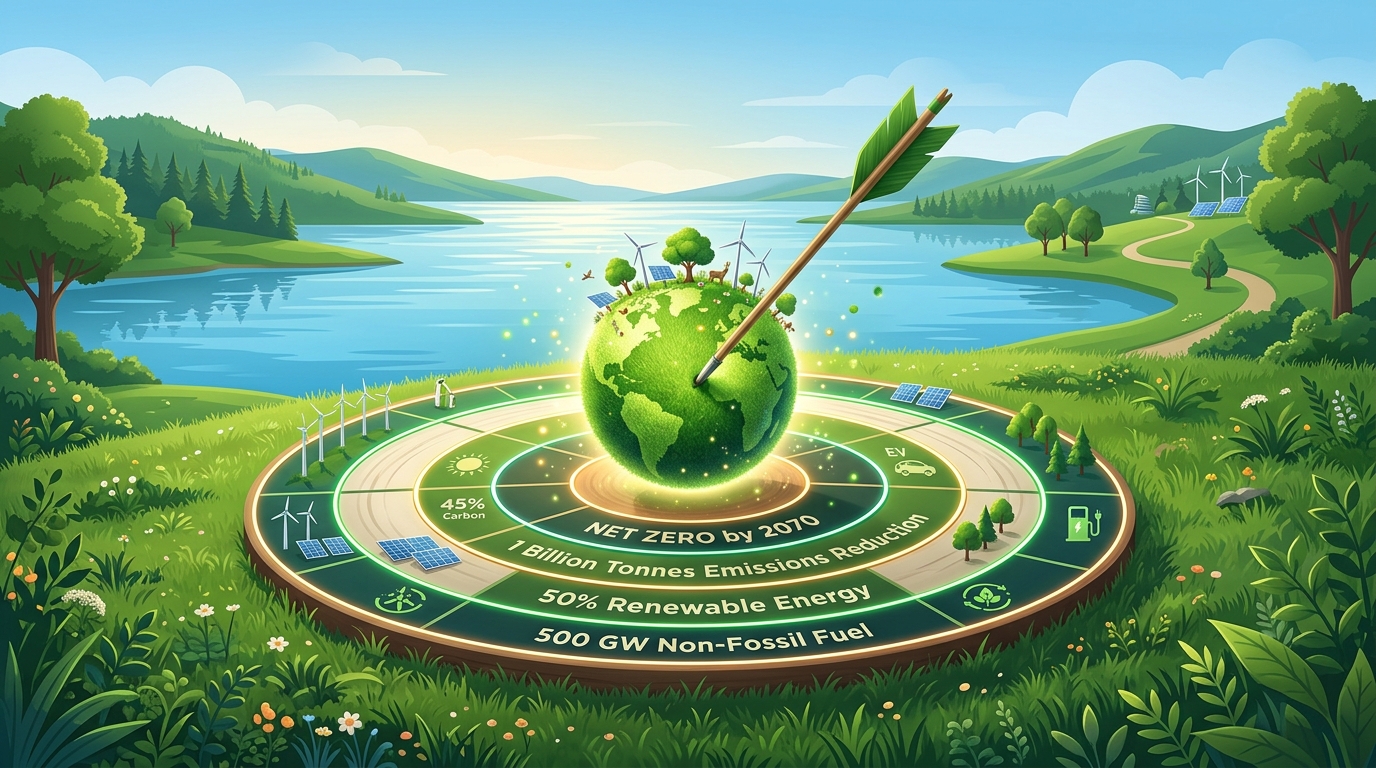
The 5 Goals Set Under India’s Panchamrit Plan
500 GW Non-Fossil Fuel
Achieve 500 GW of non-fossil fuel energy capacity by 2030. This marks a transformative step towards reducing dependency on coal and other fossil fuels.
50% Renewable Energy
Meet 50% of energy requirements from renewable energy by 2030, significantly boosting solar and wind projects across the country.
1 Billion Tonnes Reduction
Reduce total projected carbon emissions by 1 billion tons by 2030, cutting down India’s carbon footprint without hampering economic growth.
45% Carbon Intensity GDP
Lower carbon intensity of the GDP by 45% by 2030, promoting energy efficiency and low-carbon technologies across industries.
Achieve Net Zero by 2070
Neutralize greenhouse gas emissions entirely by 2070, balancing emissions with carbon absorption through natural and technological solutions.
The Roadmap to Green Energy in India
India’s Panchamrit goals align closely with its existing renewable energy programs and initiatives. The country has already become the third-largest producer of renewable energy globally, with ambitious plans to expand this capacity further.
Favourable policies, private sector involvement, and international cooperation are creating a robust framework to accelerate its energy transition.
International Solar Alliance (ISA)
Co-founded by India, promoting global solar development and investments.
National Hydrogen Energy Mission
Developing green hydrogen infrastructure to decouple heavy industry from fossil fuels.
Electric Vehicle (EV) Transition
Significant investments in EV infrastructure, storage, and battery technology.
Challenges & Opportunities
Key Challenges
- Financing the Transition: Large-scale investments are required to fund green infrastructure.
- Grid Reliability: Managing power consistency with highly variable renewable energy sources.
- Resource Constraints: Scaling manufacturing, components sourcing, and land availability.
Immense Opportunities
- Job Creation: Massive growth in local manufacturing, solar installations, and EV services.
- Economic Growth: Attracting global green capital and fostering industrial innovation.
- Energy Security: Reducing heavy dependency on costly fossil fuel imports.
Global Significance of India’s Panchamrit Goals
India’s commitments represent a landmark contribution to global climate action. Achieving the net zero target will mitigate global climate change and also inspire other developing nations.
"At Real Enviro Solutions Pvt. Ltd. (RESPL), we believe our commitment to sustainability plays a role in this transformative journey. Through our initiatives in greenhouse gas calculation, ESG reporting, and energy efficiency solutions, we align our efforts with India’s Panchamrit goals. We actively work toward enabling organizations to achieve their net zero targets, reinforcing our vision of a sustainable future."